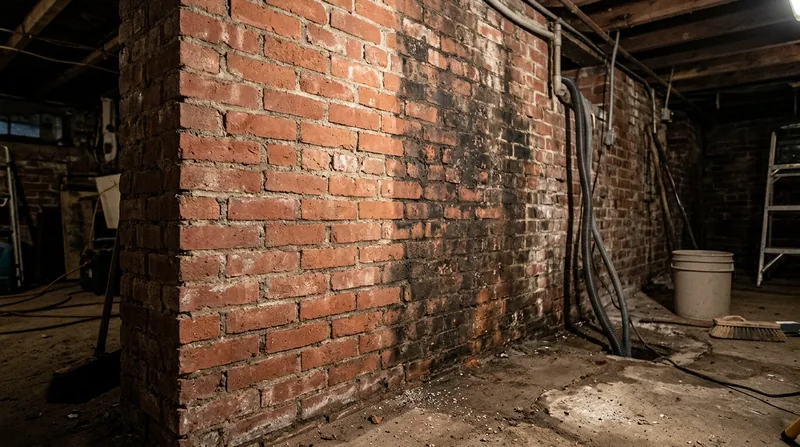




Barnstable stretches from the rocky fieldstone foundations of sea captains' houses along the Old King's Highway in Barnstable Village and West Barnstable down to the sandy outwash plain where Hyannis, Centerville, and Cotuit sit close to a high water table. That mix of 1700s half Capes, 1880s shingled summer homes in Hyannis Port and Osterville, and 1990s poured-concrete Colonials means moisture problems look different block by block. Basement Mold Remediation in Barnstable starts with finding the water source, not just scrubbing the wall. We treat the affected surfaces, contain the work area, and fix the drainage or humidity problem feeding the growth. If your basement smells musty every spring or shows white efflorescence on the block, that is the signal to call. Start with a free basement inspection and we will tell you plainly whether you are looking at a simple crack or hydrostatic pressure pushing water through the footing.
Why Basement Mold Grows So Fast in Barnstable's Older Foundations
Barnstable has a specific set of conditions that feed mold growth. The town spans the Sandwich moraine and the sandy outwash plain, so you get glacial clay soil in some pockets and fast-draining sand in others. Near the kettle ponds in Centerville and Marstons Mills the water table sits high, and in coastal storms the low ground around Hyannis and Osterville floods. Add nor'easters, hurricane remnants like Bob in 1991, the January 2018 blizzard surge, and a freeze-thaw cycle that opens cracks in fieldstone, brick, and poured concrete every winter. The most common failure mode here is water entering through the joint where the wall meets the footing after prolonged rain, then evaporating slowly into a closed basement.
- Fieldstone and brick foundations in Barnstable Village and West Barnstable wick groundwater through mortar joints that have softened over two centuries.
- Block basements in 1950s to 1980s ranches across Hyannis and Centerville show efflorescence and mold at the top of the wall where rim joists stay damp.
- Seasonal homes in Hyannis Port, Wianno, and Osterville sit closed up through damp Cape winters with no air movement, so musty smells build up unnoticed.
- Poured-concrete basements in newer Cotuit and Mashpee Colonials grow mold along cold wall corners where warm interior air condenses.
Every one of those cases has the same root cause: moisture that never got a path out. Remediation without fixing that path is a repeat job waiting to happen.
Key info: A sea captain's house on Old King's Highway in Barnstable Village had mold climbing the fieldstone wall every March. The mortar joints were passing water from the high water table, not from a roof leak. We treated the wall, then installed an interior perimeter drain and sump basin to relieve the hydrostatic pressure. The wall stayed dry the following spring.
For the regulatory side, foundation and drainage work in Barnstable is permitted through the town's building department, and you can check current requirements at the Town of Barnstable official site before any structural or drainage alteration begins.
How We Handle Basement Mold Remediation in Barnstable, Step by Step
We do not treat mold until we know where the water comes from. On a Cape Cod basement, that means checking the wall base, the footing joint, the window wells, the sump basin, and the grading outside. Once we identify the moisture source, we set up containment so spores do not spread to the rest of the house, then remove or treat the affected materials. Only after the surface work is done do we install the drainage or ventilation fix that keeps the basement dry. If the source is a crack, we may recommend epoxy or polyurethane injection rather than a full drain system.
- We walk the basement and grade with you and run a musty smell diagnostic to locate the moisture source, not just the visible growth.
- We set up containment with plastic sheeting and negative air pressure so the rest of the house stays out of the work zone.
- We remove porous materials that cannot be cleaned and treat framing, block, and concrete with an antimicrobial application.
- We correct the moisture path with the right fix, whether that is foundation crack repair, an interior drain tile system, or improved ventilation for a closed seasonal home.
- We verify dryness with a moisture meter before we call the job complete and leave you with a written summary of what was done.
The sequence matters. Skipping straight to surface treatment is why so many Barnstable homeowners see the same mold return the next damp season.
Key info: A 1920s shingled summer home in Wianno sat closed from October to May. The basement smelled musty every June. The fix was not a full drain system. We treated the affected joists, sealed the wall, and added a dehumidification plan for the closed season. The next spring opening had no musty smell.
Approaches We Use for Basement Mold Remediation in Barnstable
Not every basement needs the same treatment. A single damp corner in a Hyannis ranch is a different job from a fieldstone wall in West Barnstable passing groundwater. The table below shows the approaches we use and when each one fits.
| Approach | Description | Best for |
|---|---|---|
| Containment and surface treatment | Seal the work area, remove porous material, treat framing and concrete with antimicrobial application. | Visible growth on joists, sills, and wall surfaces with an identified moisture source. |
| Moisture source correction | Crack injection, wall sealing, or grading and downspout correction to stop water entry. | Seepage through wall cracks or the footing joint after rain. |
| Drainage installation | Interior perimeter drain and sump basin to relieve hydrostatic pressure at the wall base. | High water table near kettle ponds and repeated wet basement floors. |
| Seasonal humidity control | Dehumidification and ventilation plan for homes closed up through damp winters. | Musty smell in seasonal homes in Hyannis Port, Wianno, and Osterville. |
| Vapor barrier and wall sealing | Vapor barrier on the wall and floor to cut moisture migration into the basement air. | Damp block walls with efflorescence but no active water entry. |
We choose the lightest approach that actually solves the moisture problem, because overbuilding a fix costs you money without adding protection.
Basement Mold Remediation Cost in Barnstable: What to Expect
Most basement mold remediation jobs in Barnstable start around $1,500 and move up from there. That starting figure covers a contained work area, surface treatment, and a moisture source check. The number climbs when the affected area is large, when porous materials have to be removed, or when the real fix is a drainage system rather than surface treatment. A fieldstone foundation in Barnstable Village is slower to treat than a poured wall in Cotuit because the mortar joints hold moisture differently.
Factors that move the price: square footage of affected surface, whether framing or insulation has to be replaced, whether an interior drain tile system or sump pump is part of the fix, and access. A basement with a narrow bulkhead or a finished ceiling takes longer to contain and work in. Seasonal homes that sat closed for months often need more treatment than a year-round house with a dehumidifier running.
Get two or three estimates and compare scope, not just the bottom line. One contractor may quote surface treatment only, while another includes the drainage correction that stops the growth from returning. Ask each one what moisture source they identified and how they plan to correct it. Our full pricing overview lays out the ranges so you can compare quotes on equal terms.
What to Look for When Hiring a Basement Waterproofing Contractor Near Barnstable
Mold remediation and waterproofing overlap, so hire someone who understands both. A contractor who only treats surfaces will leave the water source in place, and a contractor who only installs drains may not handle the containment and material removal properly. Ask for proof of licensing and insurance, and request a certificate of insurance before work starts. Get at least two written estimates with the scope spelled out, and ask for references from Barnstable jobs similar to yours, especially older fieldstone or block foundations.
Confirm who pulls any required permit. Structural foundation repair, egress window cutting, and work that alters drainage or the sanitary connection of a sump discharge commonly require a permit in Barnstable, and the local building department sets the thresholds. Ask how the contractor handles disposal of removed materials and whether containment is included. A written scope that names the moisture source and the correction is a better sign than a low number with no detail. Reach out through our contact page to schedule an inspection and compare scope before you commit.
Basement Mold Remediation in Barnstable: Pricing Guide
| Service | Price | Details |
|---|---|---|
| Containment and surface treatment | Starting at $1,500 | Covers contained work area, antimicrobial treatment, and moisture source check for a single room. |
| Treatment plus moisture source correction | Starting at $2,400 | Adds crack injection or wall sealing where seepage through the wall or footing joint is feeding growth. |
| Treatment plus drainage installation | Starting at $4,500 | Includes interior perimeter drain and sump basin when hydrostatic pressure is the confirmed source. |
| Large or multi-room scope | On estimate | Finished ceilings, narrow bulkheads, and removed framing change labor enough to need an on-site look. |
| Travel | Included | In Barnstable and surrounding Cape towns, no separate call-out or mileage fee. |
| Estimate | Free | Response within 24h at (774) 208-9046, no obligation to book. |
Indicative pricing, the exact cost depends on square footage, finish, and site access. Free personalized estimate within 24h at (774) 208-9046.


